Description
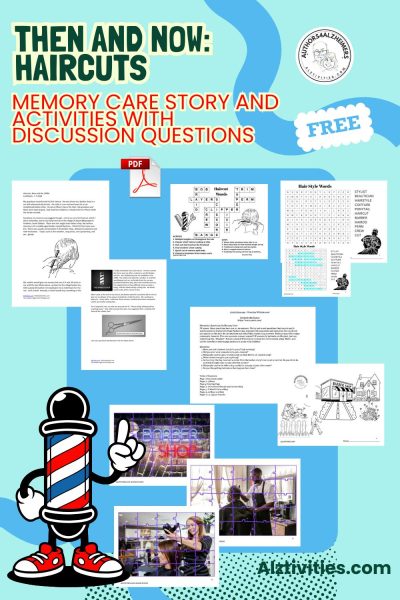
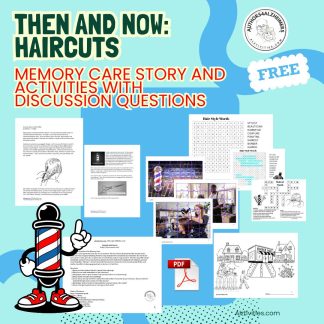
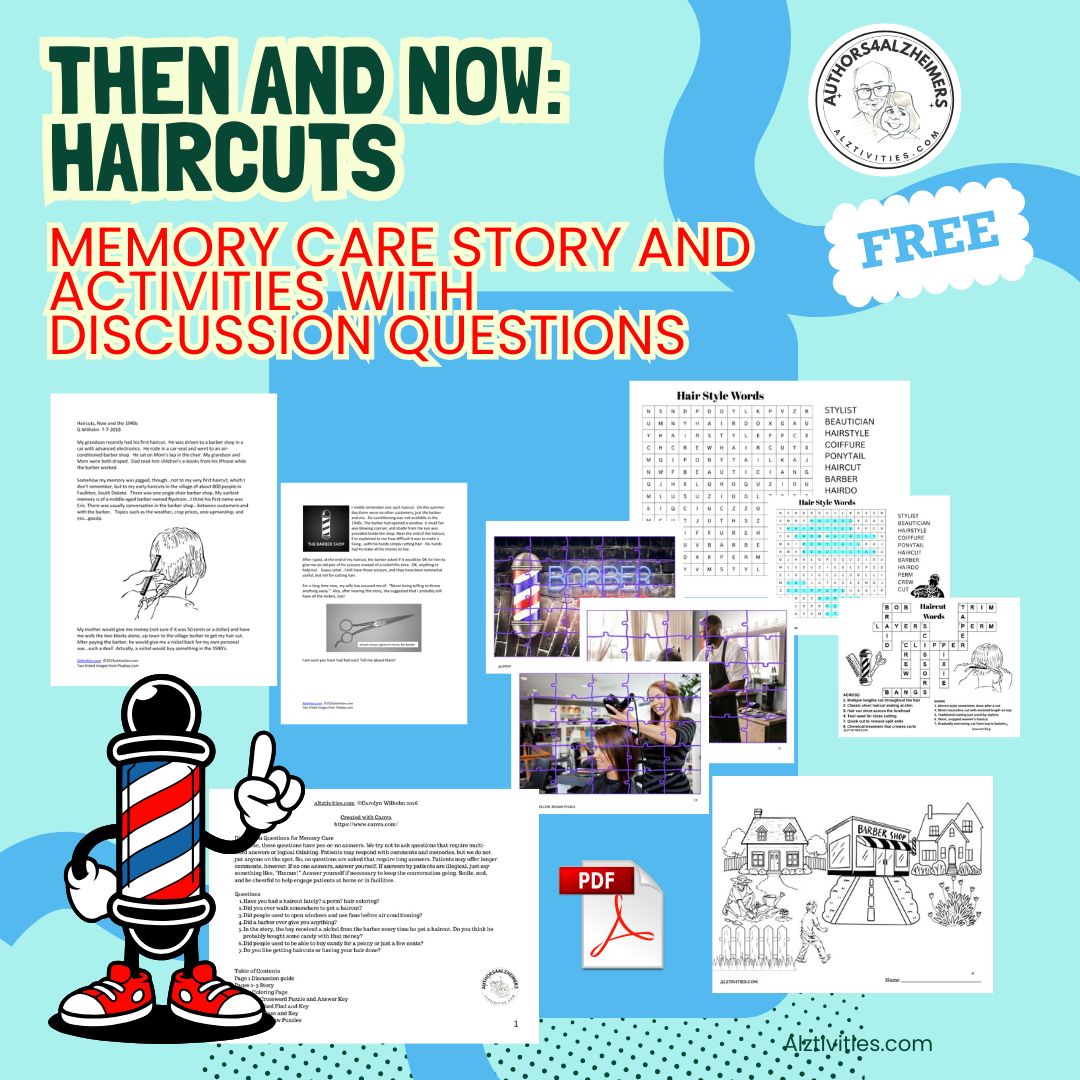
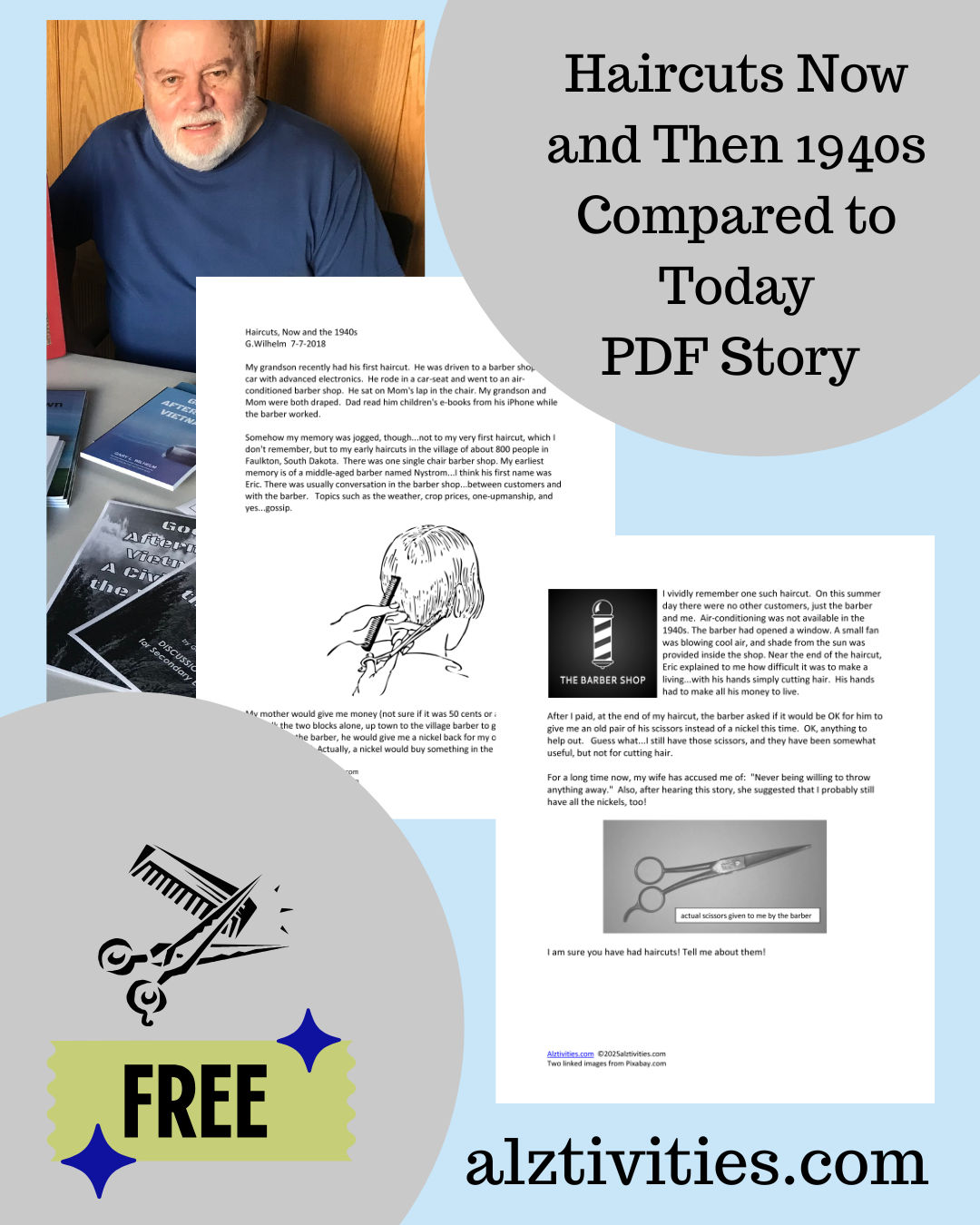
This free PDF tells the story of getting a haircut in the 1940s and is intended as a read-aloud for memory care patients at home or in facilities.
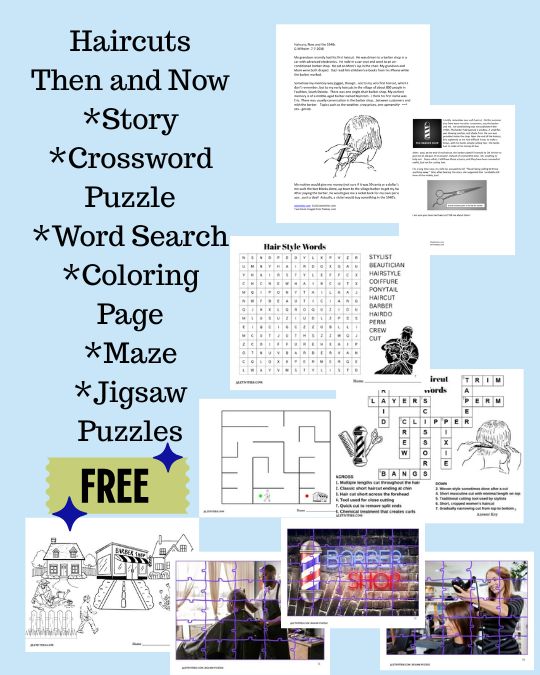
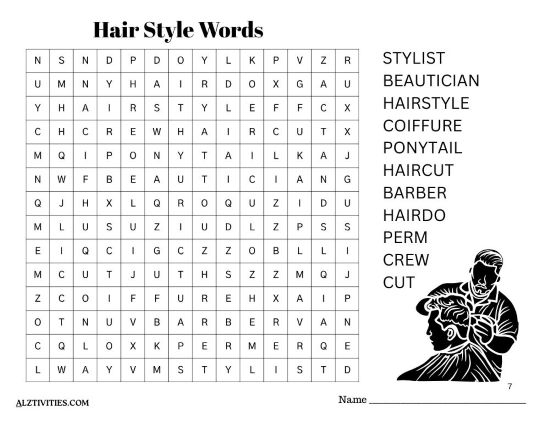
Haircuts for young boys have changed over the years. From the 1940s to today, barbershops have changed from using fans to air-conditioning and more. Gary Wilhelm remembers a haircut from long ago and compares it with his grandson’s recent haircut. The story sets the stage for engagement options, including a crossword puzzle, a word search, a maze, 3 jigsaw puzzles, and a coloring page. To engage patients, whether at home or in facilities, we can offer choices. We cannot force interest or participation in the conversation for some people, but most will engage. Some will just listen and enjoy the conversation.
Discussion Questions for Memory Care
Of course, these questions have yes-or-no answers. We try not to ask questions that require multi-word answers or logical thinking. Encourage patients to respond with comments and memories. So, no questions require long answers. If no one answers, answer yourself to keep the conversation going. If patients’ answers are illogical, just say something like, “Hmmm!” Answer yourself if necessary to keep the conversation going. Smile, nod, and be cheerful to help engage patients at home or in facilities. We hope everyone feels comfortable and has a good time together, reminiscing.
Questions
- Have you had a haircut lately? a perm? hair coloring?
- Walking to get a haircut used to be common. Did you walk somewhere to get a haircut?
- Without air conditioning, people used to open windows in smaller shops. Did you open windows to cool down a space?
- The barber in this story used to give the author a nickel after a haircut. Did a barber ever give you anything?
- In the story, the boy received a nickel from the barber every time he got a haircut. Do you think he probably bought some candy with that money?
- Candy used to cost just a few cents. Did you ever buy penny candy?
- Do you like getting haircuts or having your hair done?
Table of Contents
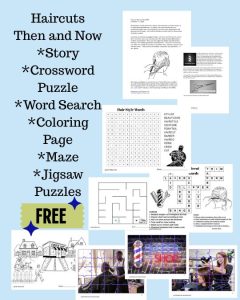
An activities leader or home caregiver page is included to help the person in charge with some quick conversation ideas. It has an overview of the pages included in the PDF.
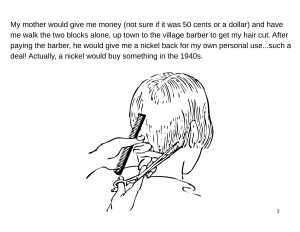
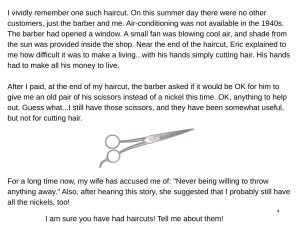
The story is on three pages.
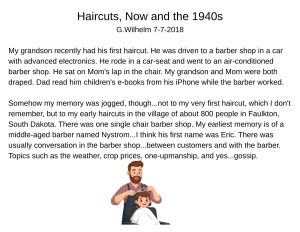
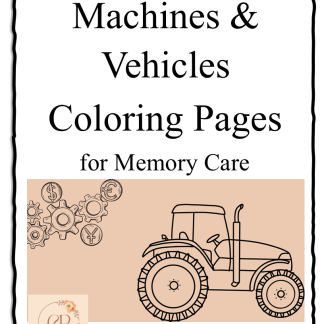
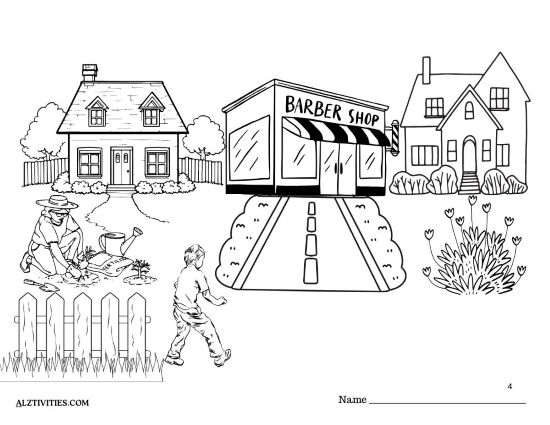
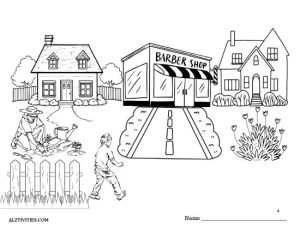
A coloring page could be offered as one option for those who may be interested.
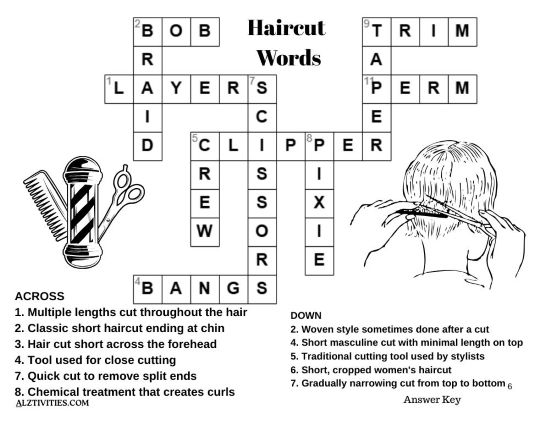
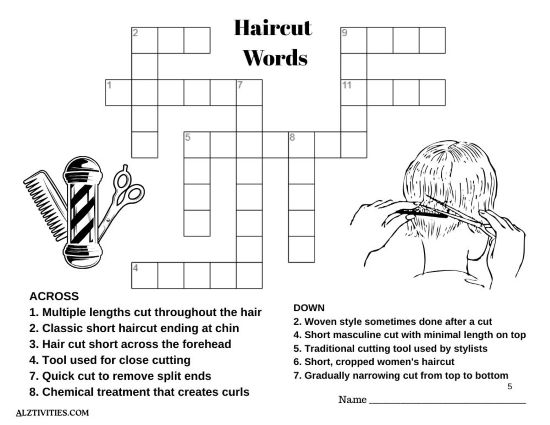
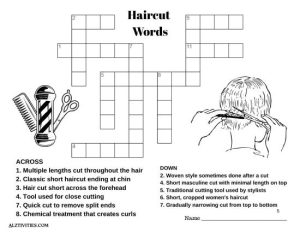
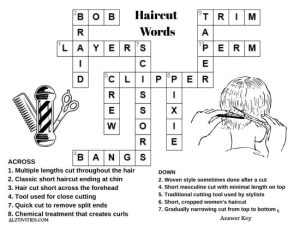
Also included is a dementia friendly crossword puzzle and answer key. It is easy but not childish.
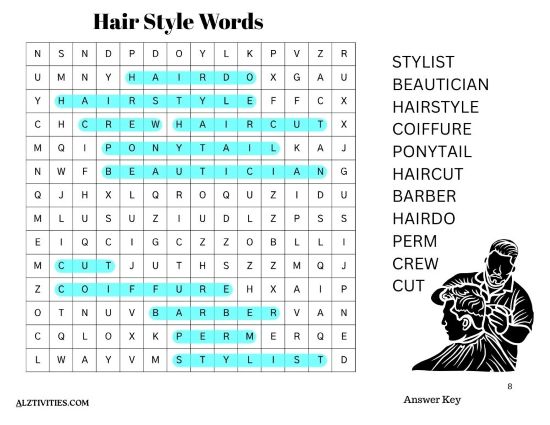
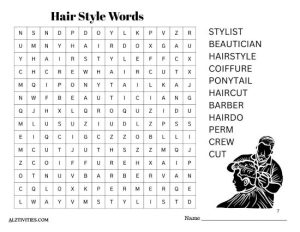
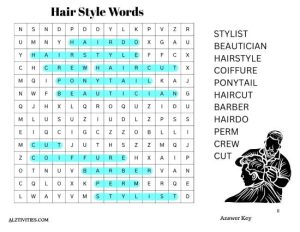
The word search for this story has answers that read left to right for lesson confusion rather than regular word finds.
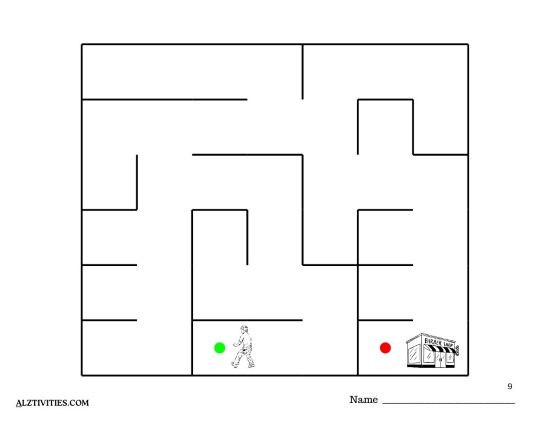
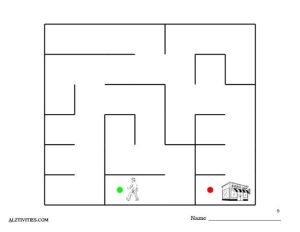
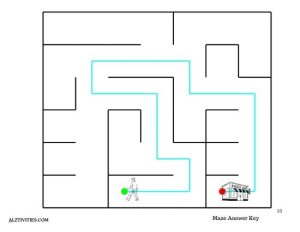
Mazes are something a few people may enjoy. So this PDF has one, and there is an answer key.
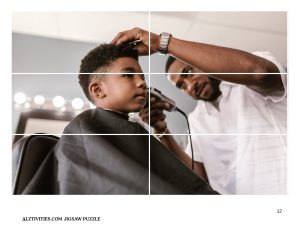
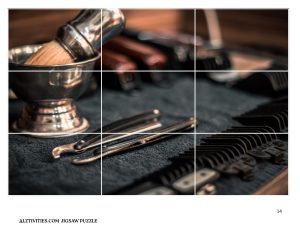
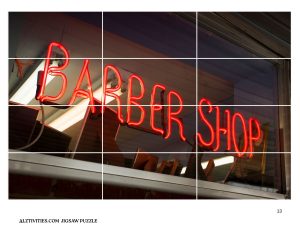
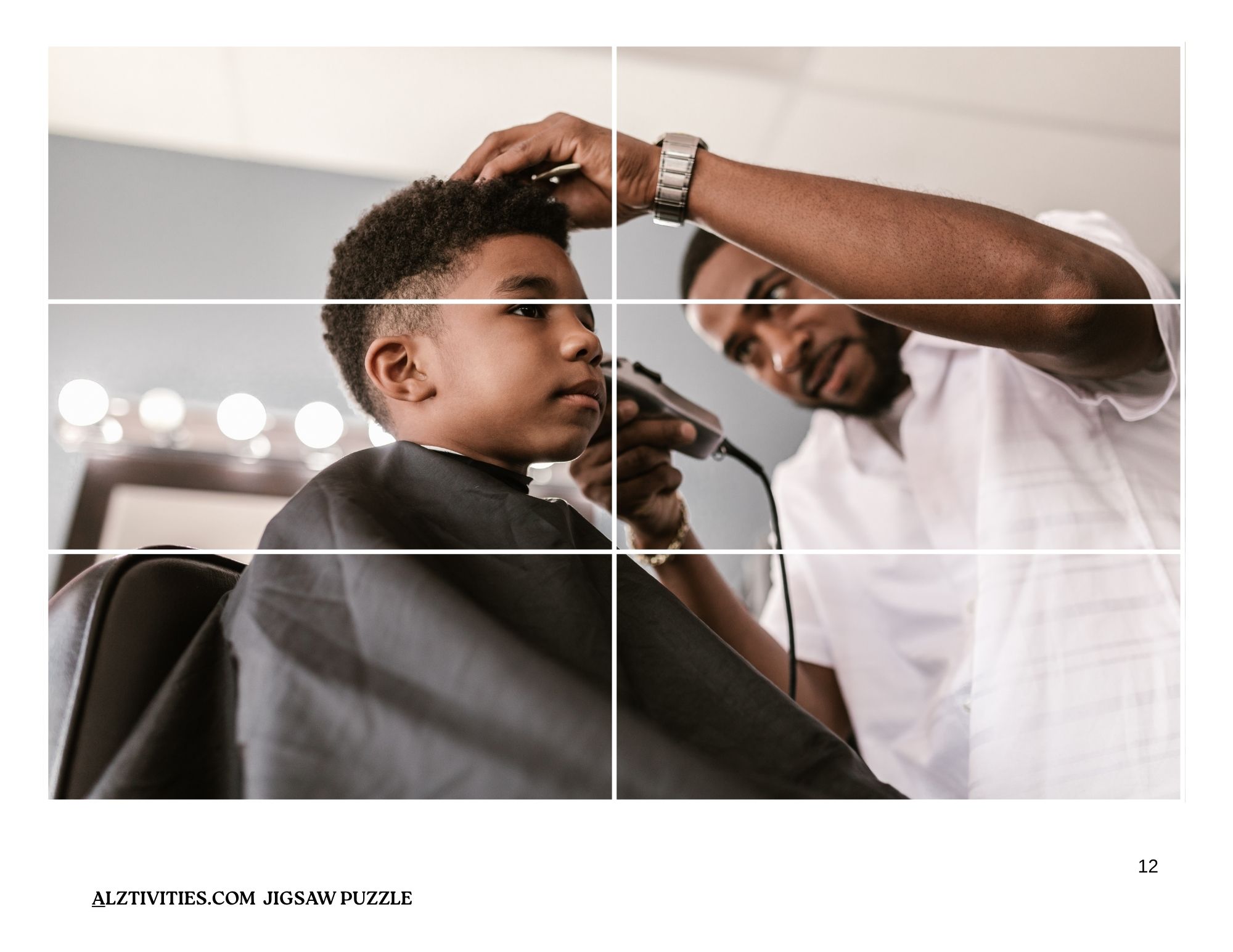
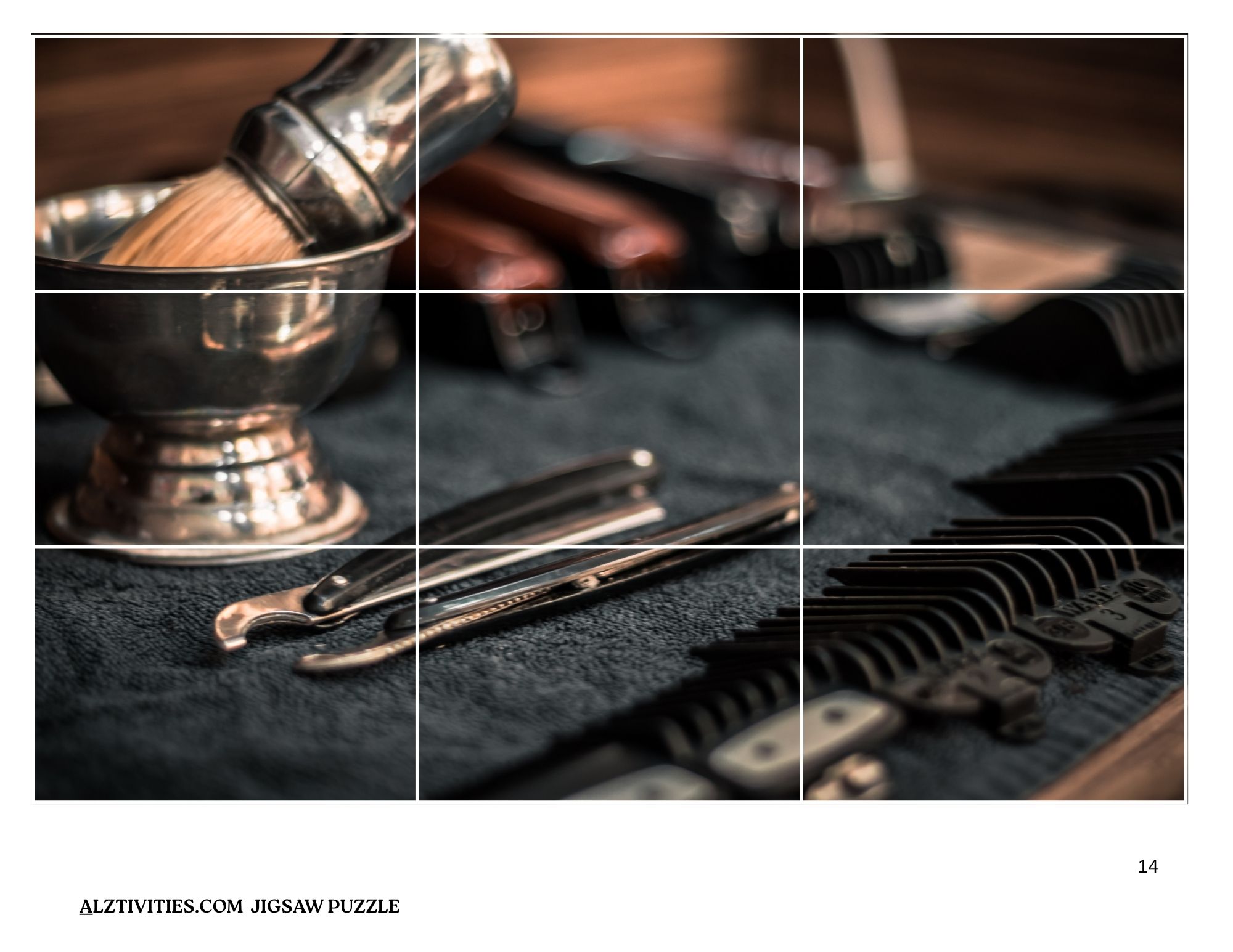
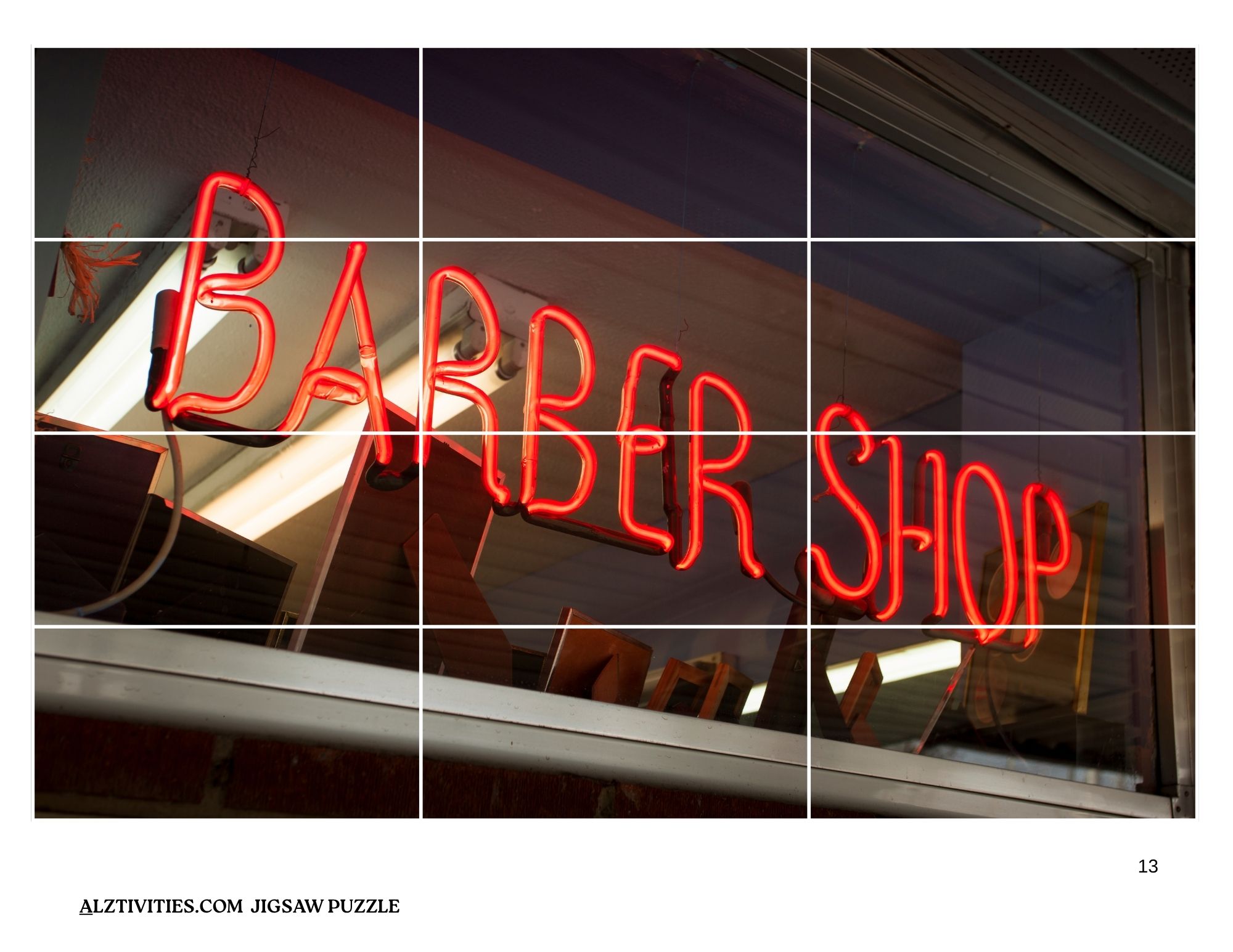
Jigsaw puzzles might interest some. They could be printed on cardstock, and the pieces stored in envelopes for reuse.