Posted on

July 4th Memory Care Free Activity Pages

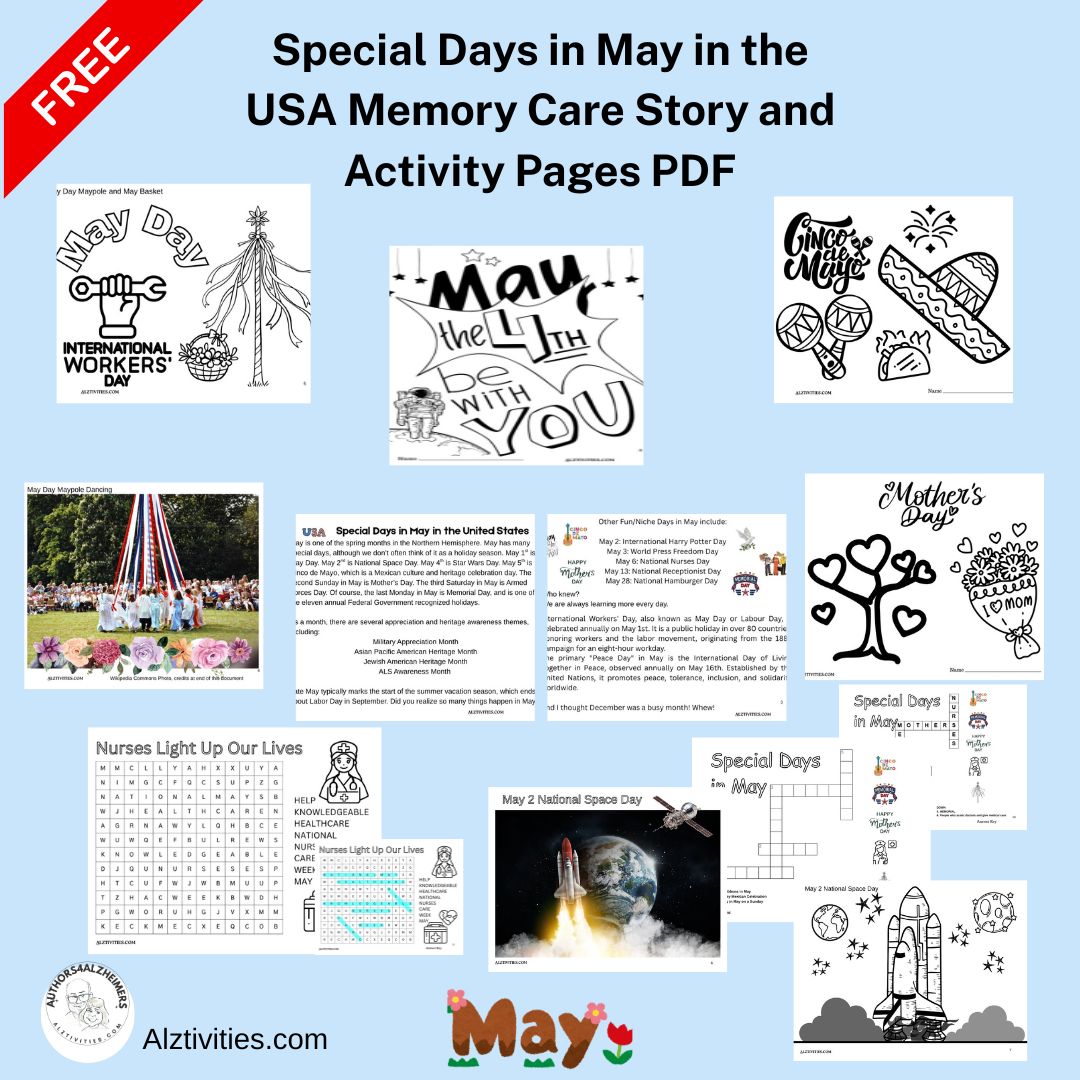
Special-Days-May-Memory-Care-Story-and-Activity-pgs

July 4th will happen sooner rather than later, and activity directors could have this free instant PDF download as part of their resources. The PDF opens when you click the button below the PDF image. Created with dementia patients in mind, as they are often offered work that is too complicated or too childish. Consequently, they won’t finish pages as they get bored or overwhelmed. Patients should also have a choice and be given alternatives to keep them engaged.

Discussion Questions for Memory Care

Of course, these questions have yes-or-no answers to ask patients at home or in facilities. We try not to ask questions that require multi-word answers or logical thinking. Patients may respond with comments and memories, and we also do not put anyone on the spot. So, no questions require long answers. However, patients may offer longer comments. Nonetheless, if no one answers, answer yourself. If patients’ answers are illogical, just say something like, “Hmmm!” Answer yourself if necessary to keep the conversation going. Smile, nod, and be cheerful to help engage patients at home or in facilities. Emotions are more important than facts.

PRINT ONLY THE PAGES WANTED

Questions

  • Do you like fireworks? Do you like them on the 4th of July?
  • Do you like picnics?
  • Do you like parades?
  • Have you played a band instrument? Clarinet? Trumpet? Drums? Tuba?
  • Did you ever march in a band?
  • Do you enjoy summer?

Table of Contents (view pages above)

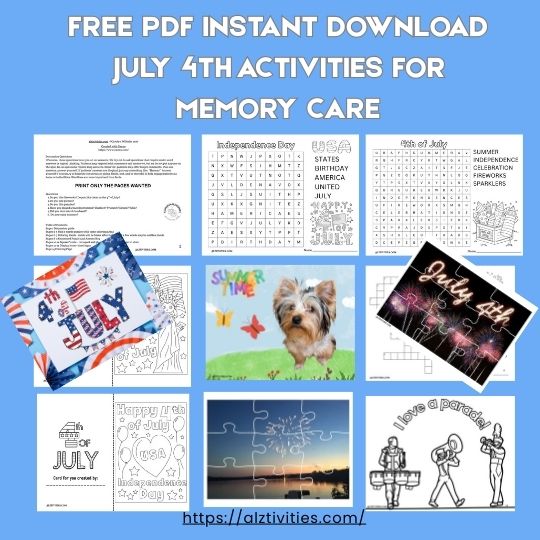
Page 1 Discussion guide for the activities leader who is already thinking on his or her feet and might like some ideas for yes or no questions. That way, the page could be quickly consulted.
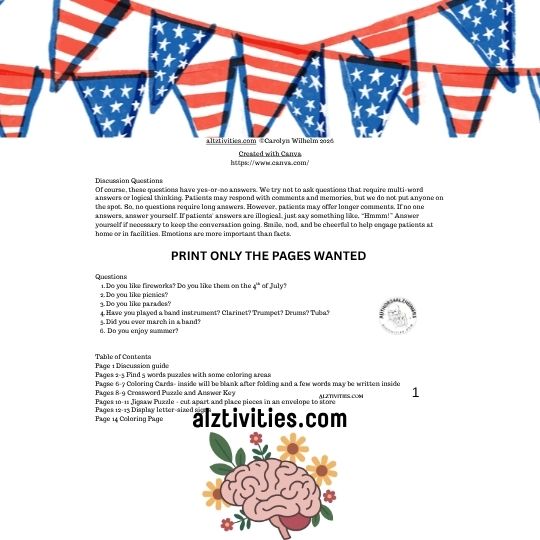
activity leader informational page with some yes/no questions that could be asked of residents

Pages for Participants to Select From and Work On

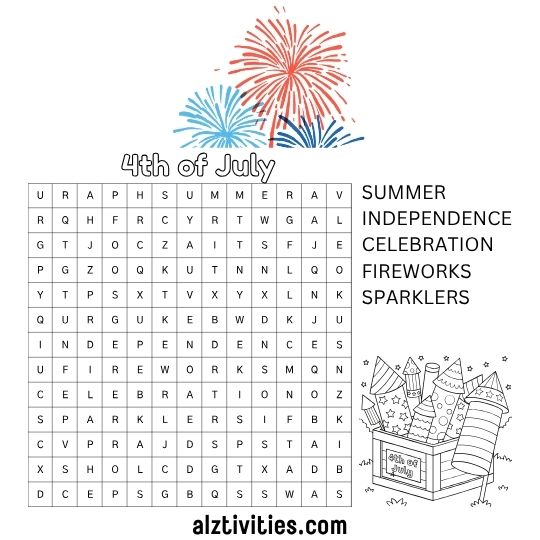
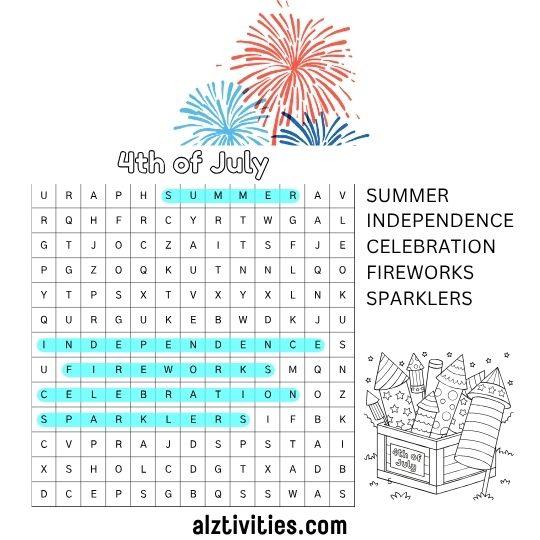
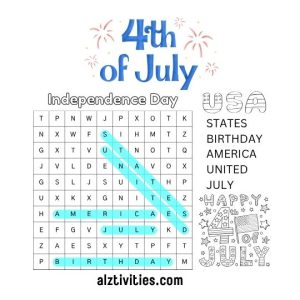
The pages 2-5 have “Find 5-word puzzles” with some coloring areas. Words are located as in reading, left to right. The word find has clear, large print.

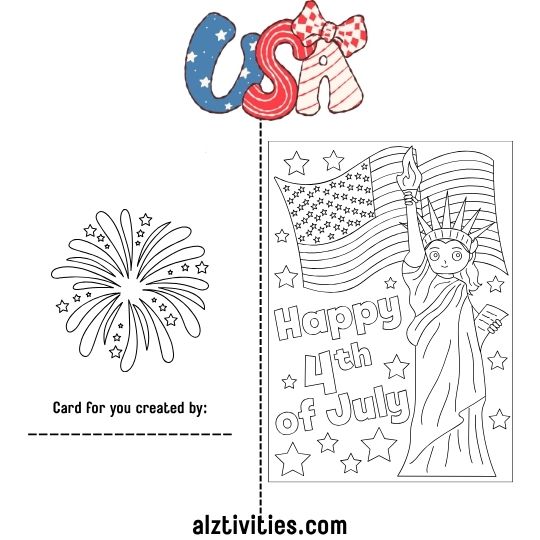
Coloring Cards are found on pages 6 and 7. The inside of the card will be blank after folding. A few words may be written inside, or the patient may sign his or her name. These could be given to family members who visit near the holiday, or even sent in the mail.

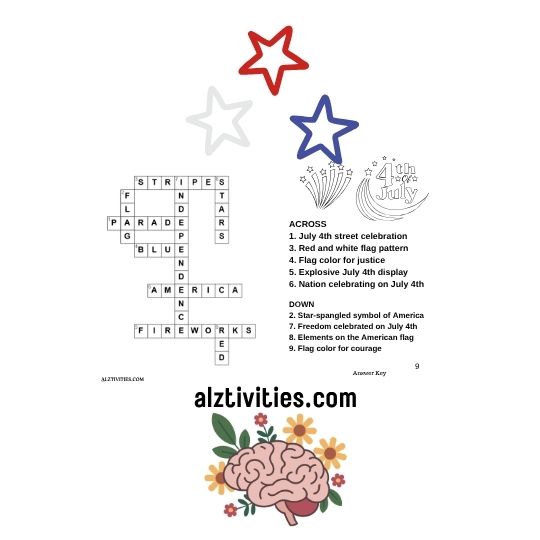
There is a drossword puzzle and answer key on pages 8 and 9. Again, the writing spaces are large, and the words are most likely easily figured out.

There are two Jigsaw Puzzles which could be copied on cardstock and cut apart. The pieces could be stored in an envelope. Or, they could be glued to another piece of paper and displayed in resident rooms.


4th-of-July-memory-care-activities (12)

At the end of the PDF, there are two seasonal signs that could help decorate the commons area.

sign to help brighten a patient room
seasonal sign for decor

And finally, a parade coloring page for the season.

parade coloring page
find-5-words-search-crossword-puzzles-discussion-questions-more

Thank you for reading,

Carolyn

Posted on

Stop and Do Not Enter Signs to Help Prevent Wandering in MC

Stop-signs-for-dementia-care-wandering-resident

Oh, the wandering in Memory Care! The song Walking After Midnight by Patsy Cline is taken way too seriously! At least my LO walks at night, which is supposedly one symptom of Lewy Body Dementia. People tell me he walks at night. Yeah, I know, thanks so much! But the wandering in other rooms is quite an issue in many facilities.

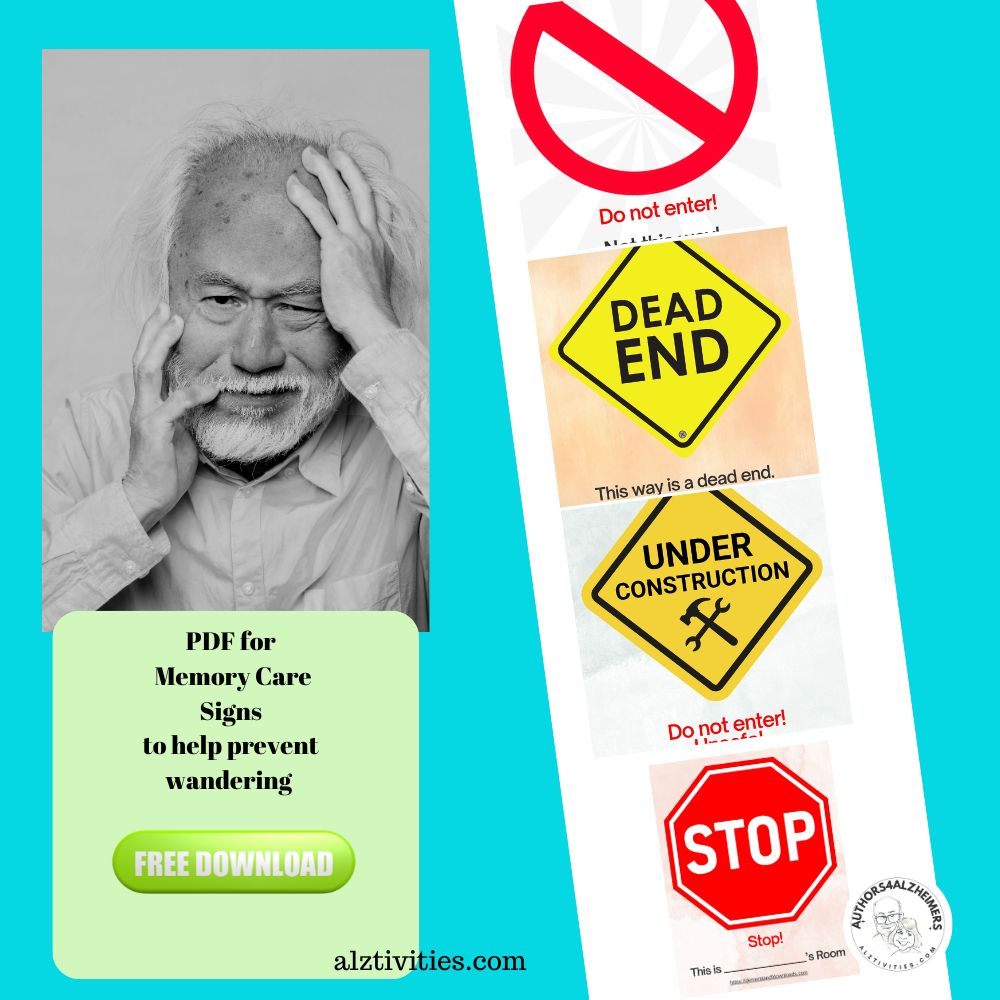
Stop signs may help, but of course, they could be ignored. For constant wandering in one or two rooms, these could help. Click on the download button under the PDF preview, last on this page.

Stop-sign-and-dead-end-plus-other-signs PDF free

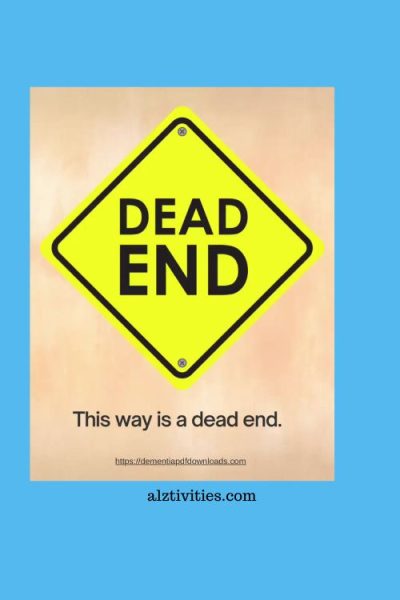
The door to the kitchen might display a do not enter sign. It may stop a few people from trying the door. Mostly, people seek a way out of the facility and a way home. So, some are not detoured from any signs. But it might help.

Stop-sign-and-dead-end-plus-other-signs PDF free

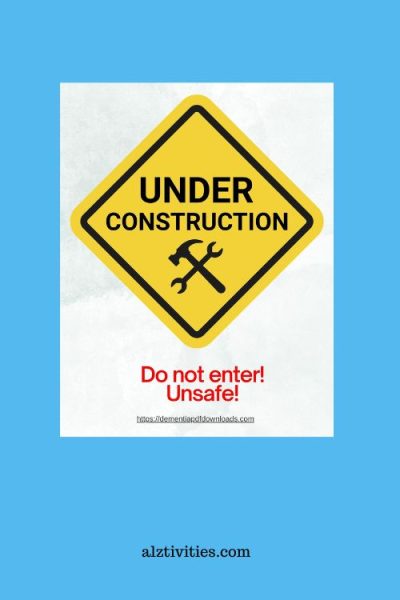
Another sign could be that this under-construction sign might stop some, but like my LO, he is intrigued and wants to help people who are assembling furniture. He has been found in rooms with open doors and IKEA parts out for furniture assembly. But some might stop!

Stop-sign-and-dead-end-plus-other-signs PDF free

And a good old-fashioned STOP sign might help a few! Just print the pages wanted from the PDF.

Stop-sign-and-dead-end-plus-other-signs PDF free

See images of the free PDF and download by clicking the download button just below this informational display. No login is required. Thank you.

Thank you for reading, and I hope some people find this printable helpful.

Carolyn

Posted on

No Place is Perfect Even Home & Resources

No-Place-is-Perfect-Even-Home-letter-size-PDF-downloadable-poster

Although we know no place is perfect, including home, as caretakers, we do worry. Especially when patients do not take the required medicine, follow directions, argue, or refuse help. We want to help and do everything possible for our loved one. However, all we can do is do the best we can. We only know what we know at the time and not what we might learn in the future. The future is not ours to see, so to speak. We learn and worry we didn’t do our best before, but usually we didn’t fully understand.

Printable PDF Letter-Size Poster

This letter-sized PDF poster is printable should a reminder be helpful. Remembering that no one person, no home, no alternative living, nothing we can do will be perfect. We can just try, do our best, and keep putting one foot in front of the other, no matter how difficult the day might be. This might not be the worst day, although it might seem like it now. The storm of dementia is just different for every patient, and there are no clear answers or paths.

No-Place-is-Perfect-Even-Home-letter-size-PDF-poster

Here is the free instant download PDF. Get a copy by clicking on the download button following the graphic.

When it is a horrible day, what might caretakers do? There might not be much time to even breathe. However, checking in with a dementia Facebook group might be a quick reminder that things could always be worse. Asking for help in online groups might have to wait for another day, when we might have more time.

There are many helpful sites online. I have consulted these sites myself and highly recommend them.

Embrace AKA Embracing Journeys Facebook Group

Embrace or Embracing Journeys is a Facebook group for family and professional family caretakers. It is like talking to the leader at the kitchen table with a cup of coffee. When you see the videos you will understand Krisie is approachable and understandable. Her website offers many opportunities for caregivers to be “human helping humans.” She lives in Minnesota and so do I, which I like. This site was recommended to me by The Redhead Rev, a minister.

Embrace-facebook-group-recommended

Teepa Snow Guru of Dementia Care

Of course, you probably know about Teepa Snow, with her brilliant positive approach for caretakers to use. Her books and videos are extremely helpful. Teepa Snow’s Positive Approach to Care YouTube channel is wonderful. Start with any video, or search for a topic on your mind, to learn about her positive approach. I have a short review of her Gems book at this post. The entire name of the book I call “the gems book” is Dementia Caregiver Guide: Teepa Snow’s Positive Approach to Care techniques for caregiving, Alzheimer’s, and other forms of dementia by Teepa Snow. I reviewed other books that have helped me at that post, as well.

Clinics Also Have Zoom Groups and Informational Videos for Caregivers

Some clinics, such as the Mayo Clinic, offer online groups for in-person or Zoom sessions with experienced leaders. Fairview Clinic has informational videos for caretakers. Check with your health group to see what they might offer. The Alzheimer’s Association has learning opportunities and books. Some state governments have help and websites to support caretakers. Every state is different, so check the site by searching for keywords such as dementia, caretakers, nursing homes, and so on. Minnesota has a government page with links to alternative living facilities. The Senior Linkage line is another place to consult if you live in Minnesota. We all know we can call 911 when things get really tough, and did you know you could leave the house and then call the number, as that might be safest? We all hope we do not need to call. We all wish the patients were easy to care for and that we could give them the best care ourselves. We wish there were a cure! But we live in the real world.

I hope wherever you live, there are supportive services and helpful information.

Thank you for reading, Carolyn