Book Reviews
This page has reviews of books about various forms of dementia I have read myself. Here are my thoughts about how they may be helpful to others. My LO has mixed dementia types so I read a wide variety of books on the topic. No, I am not an Amazon affiliate. I also write reviews for Midwest Book Review (MWB) as a volunteer.
Lewy Body Dementia
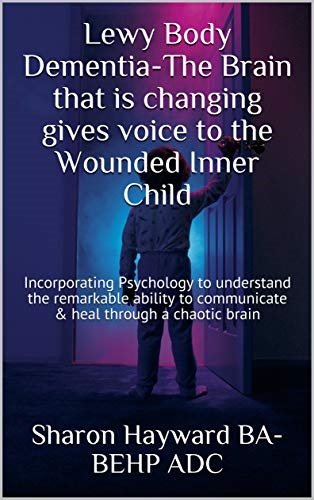
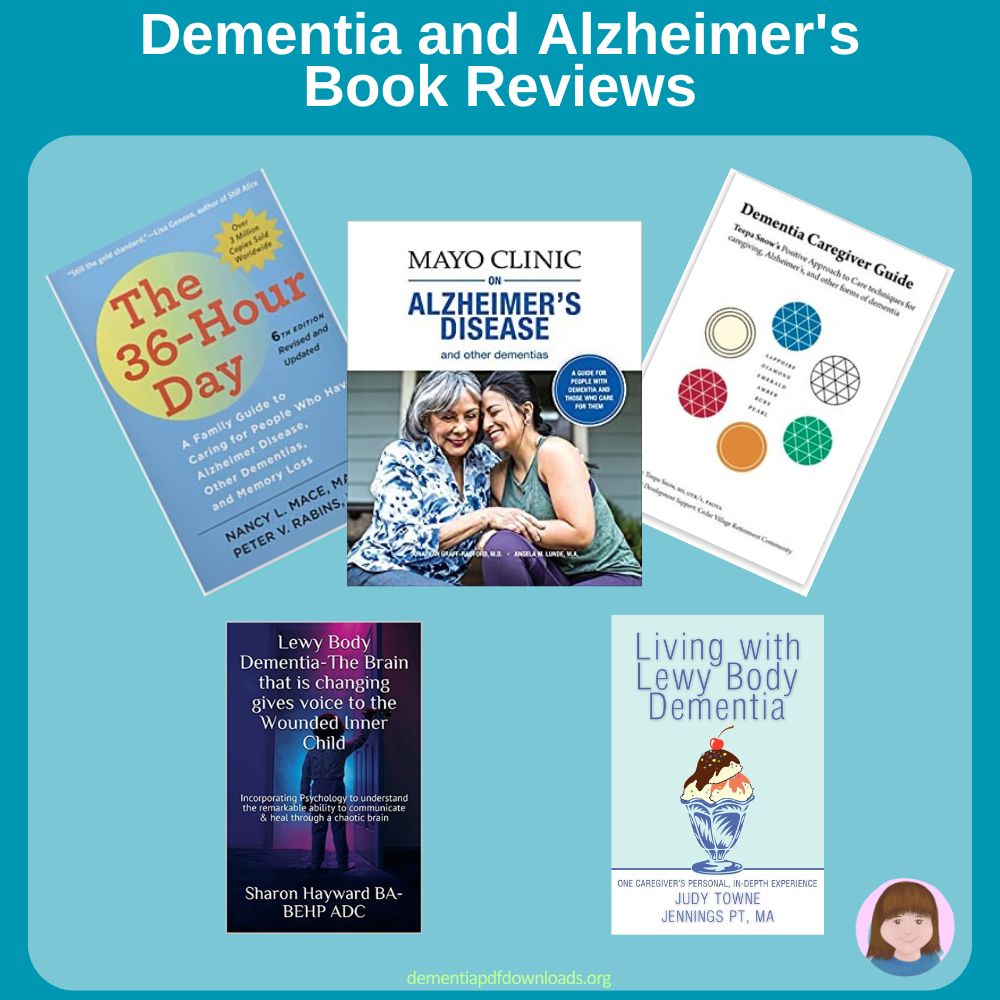
Lewy Body Dementia-The Brain that is Changing Gives Voice to the Wounded Inner Child: Incorporating Psychology to understand the remarkable ability to communicate & heal through a chaotic brain
This book is exactly as described, as it is one person’s view of her experience with a loved one with Lewy Body Dementia. Much of the information is aimed at understanding the patient. Understanding what a PWD (person/people with dementia) is trying to convey. The author was very emotionally attached to the LO. This book may help inform the search for clues about the patient to piece together the puzzle of what he or she is trying to say.
Alzheimer’s Book
by Nancy L. Mace and Peter V. Rabins
See my review of this book on Midwest Book Review.
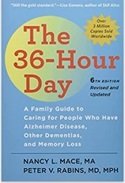
This book is widely regarded as an authoritative source of information. It has been revised over the past 40 years as the publishers keep up to date with the latest knowledge. The Alzheimer Society rates this book as the most highly recommended. That means if you can read one book, read this one. It discusses the various forms of dementia. Dementia is the umbrella term for the 120 various types of dementia, including Alzheimer’s, Lewy Body Dementia, and others.
Why the 36-hour day? You know, after spending time caregiving for a PWD. The time drags when you are trying to figure out what the person has difficulty communicating their wants and needs. Although technical, the book contains stories about real people.
Brain Book
Travelers to Unimaginable Lands: Stories of Dementia, the Caregiver, and the Human Brain
This interesting book takes ten traits of dementia and has ten chapters describing how ten caregivers developed similar traits while caregiving for a PWD. I didn’t realize how much caregiving stresses a person, even to the point of developing dementia behaviors. I can see I have, and it is troubling. Do try to take care of yourself, caregivers; you have a tough row to hoe. This should also be read after a few months or more of caregiving to relate to the experiences of the people in the book. When I saw myself in the text, I realized the self-care areas I need to practice.
Mayo Clinic Book
By Jonathan Graff-Radford and Angela M. Lunde
See my review of this book on the Midwest Book Review site.
Of course, any book by the Mayo Clinic publishers is knowledgeable and 100% correct. The writing is technical, and I think professionals would get more out of it than I did. However, it was good to read about the various types of problems people face with memory loss. My LO was diagnosed at the Mayo Clinic, and I trust them completely. So I read the portions that made sense to me. I bought this book for family members. To me, it is more of a reference guide than something to sit down and read with a cup of coffee.
Teepa Snow
Dementia Caregiver Guide
By Teepa Snow (dementia guru extraordinaire)
At just about 100 pages, this easy-to-read book helps people understand the changes that come with advancing dementia. It also helps in understanding impairments in thinking, reasoning, or information processing. It accompanies Teepa Snow’s person-centered care interventions, including the GEMS and Positive Approach to Care techniques. See Teepa Snow on YouTube for dozens of videos on the various questions people ask about this topic. You will want to read more books by this author.
I have also read the following books:
Mom & Me : A Story of Dementia and the Power of God’s Love
by  Deborah Lyn Stanley

Please Explain Alzheimer's Disease to Me: A Children's Story and Parent Handbook About Dementia ("Please Explain to Me")
by  Laurie Zelinger

Lewy Body Dementia-The Brain that is changing gives voice to the Wounded Inner Child: Incorporating Psychology to understand the remarkable ability to communicate & heal through a chaotic brain
by  Sharon Hayward

Living with Lewy Body Dementia: One Caregiver’s Personal, In-Depth Experience
by  Judy Towne

Forget Me Not: The #1 Alzheimer's and Dementia Guide for Professional and Family Caregivers
by  Debra Kostiw

Dementia with Lewy Bodies and Parkinson's Disease Dementia: Patient, Family, and Clinician Working Together for Better Outcomes
by  Dr. Ahlskog, J. Eric MD, PhD  (Author)
I have read even more books on dementia. But nothing really prepares a person for the experience they are about to have when a loved one is diagnosed. It is just a cruel disease.
Thank you for reading, Carolyn