Posted on

Help Dementia Patients Not Obsess Over Cuff Buttons

help-dementia-patients-stop-obsessing-over-cuff-buttons

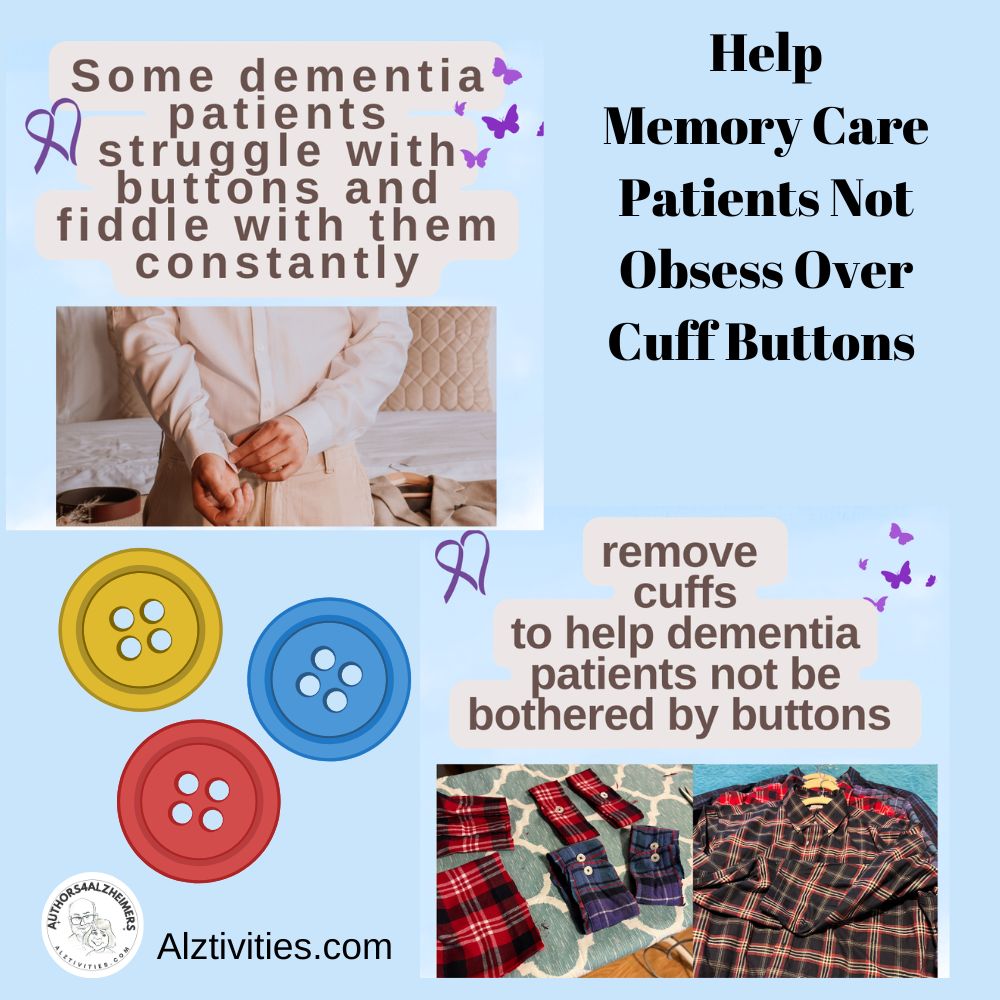
Clothing can be such an issue for people with dementia. Do you have a patient who fiddles with cuff buttons all day long? Yes? Here is one idea to help dementia patients avoid obsessing over cuff buttons: cut off the cuffs and hem the sleeves. Yes, it might not be the most professional look ever, but the comfort level increases. My LO was constantly fiddling with buttons and asking to have them buttoned and unbuttoned. They seem annoyed that they can no longer get buttons through buttonholes, but instead of refraining from trying and leaving them alone, they obsess. Yes, I have tried adaptive clothing, but found it had some new issues, like the back of the shirt flap can hang open. Caregivers do not seem to select adaptive clothing even if available, at least from what I have seen.
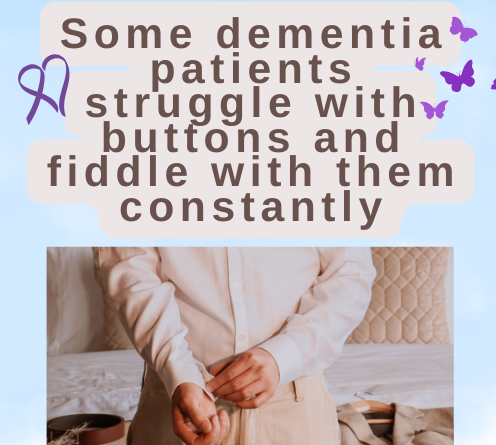
My LO was doing this until I decided to just cut the cuffs off and hem the sleeves. Yes, they are a little shorter, but they were too long in the first place. And he just couldn’t stop himself. I was buttoning all day, it seemed. So I wanted to remove the issues.
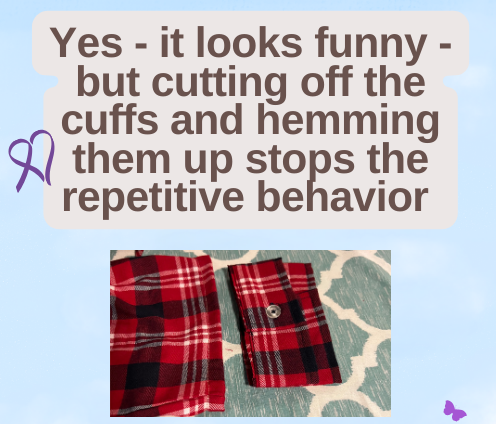
So I went to the ironing board and sewing machine and just cut the cuffs off, hemmed the shirt, and offered no explanation. He didn’t really seem to notice, and the behavior stopped. It used to be all the buttons on the shirt. I see the caregivers often leave his shirt open, and this must be why – he isn’t constantly asking for them to be buttoned.
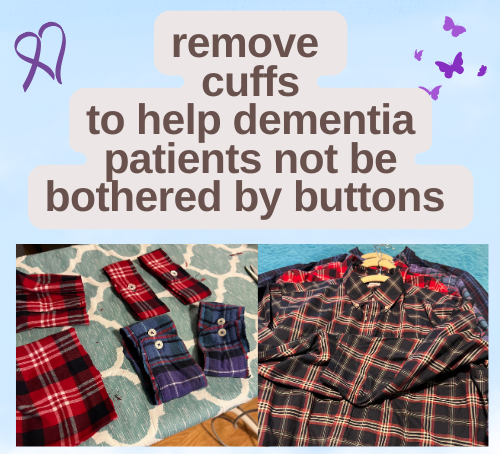
Maybe such drastic measures are not needed for all patients, but this solved one of the many problems we have found along this journey. The days are long as I try to provide caregiving, as I am thinking of more than one person. I have to think for myself, my LO, and also the other CNAs. It can be exhausting. This took one thing off my plate.

I have watched some male dementia patients also obsessively try to button those spare buttons inside the bottom of shirts. So, I would just remove the spare buttons and spare the person from futile effort and concern.

Thanks for reading, and I hope this helps some people.

Carolyn
Posted on

The Dementia Experience Presentation by Theresa Klein OTR/L

Theresa-Kline-OTRL-dementia-experience-training-caregiver

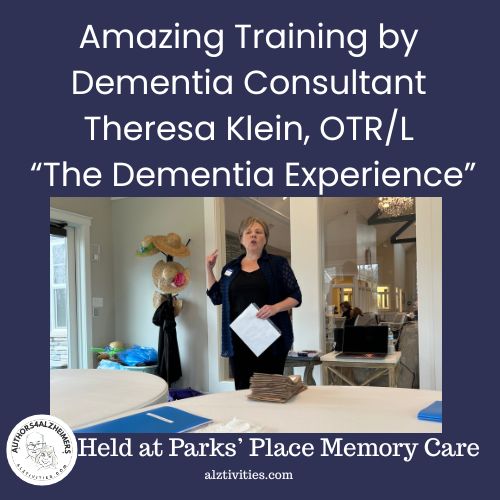
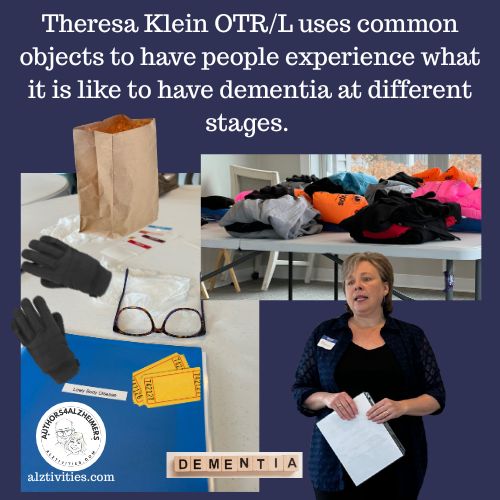
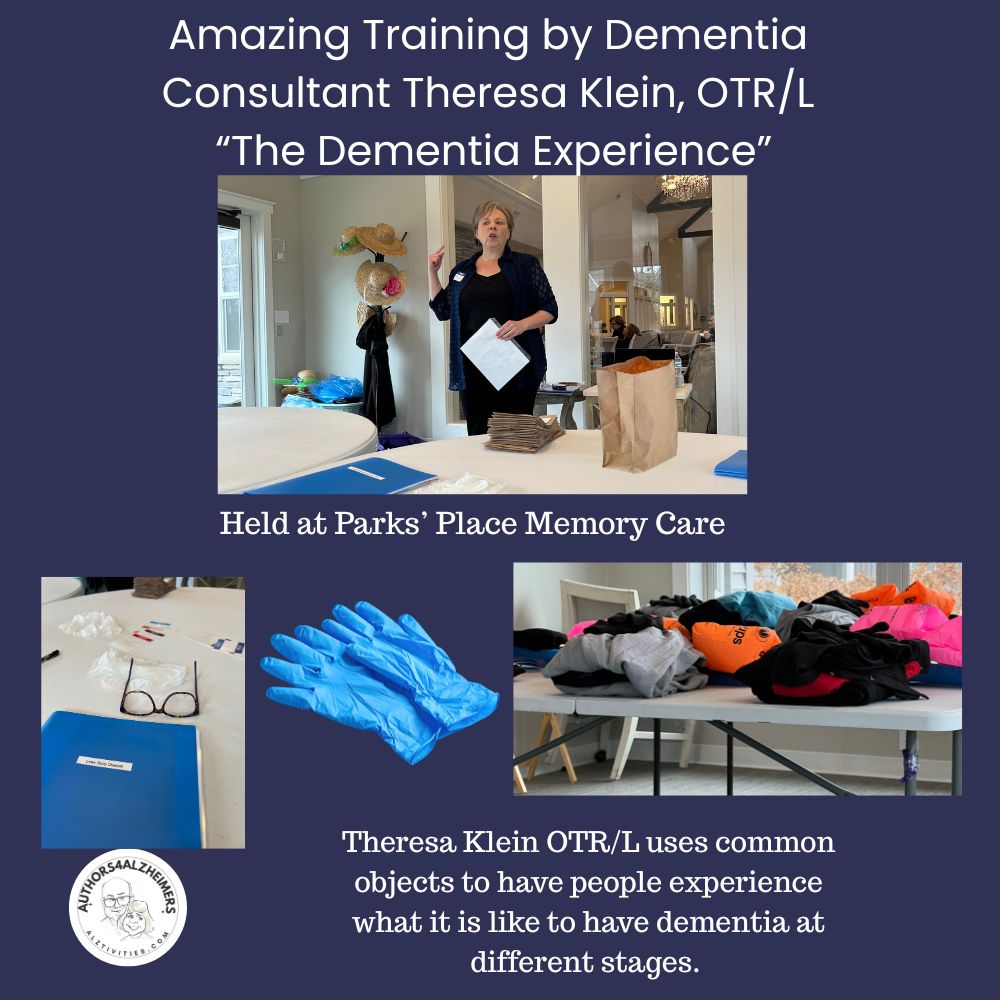
I attended a training by Dementia Consultant, Theresa Klein, OTR/L (11/20/25).  The training was called “The Dementia Experience.”  She put us in the shoes of our loved ones with dementia using everyday household objects we all have either at home or in our loved ones’ care facilities. It seemed simple as we navigated through the different levels of dementia using the materials she provided. Kitchen objects, clothing, and props helped her make her point. Theresa Klein has been working in dementia care, specializing in early, middle and late-stage Dementia Care, for the past 35 years.

What happens at the training? We became dementia patients!

Later, though, and thinking it over, the impact was huge. In fact, it was upsetting to realize later the implications of the different exercises. For instance, we wore gloves for most of the training. What a relief it was to take them off at the end . . . but people with dementia cannot remove their “gloves” or problems brought on by their condition. I cannot stop thinking about the presentation.

The different exercises made us feel how our loved ones feel as they live their lives. We can realize what it might be like, but not the permanence they live with daily. Dementia is horrible, we know. Theresa Klein really made it clear what the patients are going through. We could leave training, but they cannot change their condition.

She clearly discussed the levels and types of dementia. It progresses slowly, then can change quickly, always downward. She showed us their point of view and how to best help from their perspective. It was an interesting time, and she really made her points crystal clear. If you are able to participate in such a program, as I was lucky enough to do, I highly recommend signing up.

The following paragraphs are from Theresa Klein’s information.

The Dementia Experience:

As care partners, we can improve our care by understanding our residents and their needs. What if we could experience the changes our residents with dementia are experiencing? What does it feel like to be diagnosed with dementia? How would you handle losing your memory? Would you be frustrated with being unable to communicate with others? Would you be embarrassed if you needed assistance with your cares? How would you cope if you had trouble sitting, standing, and walking?

The Dementia Experience is an interactive learning session that allows us to enter our residents’ world to better understand their struggles.  The goal of the Dementia Experience is for care partners to walk in their residents’ shoes to gain knowledge, develop insight into residents’feelings and needs, increase empathy, and better guide care delivery. Participants will actively engage in a series of activities to experience early-, middle-, and late-stage dementia symptoms.

Thank you for reading, Carolyn

If you ever have the opportunity to participate in such a training, you won’t regret it!

Thank you for reading, Carolyn

Posted on

Sadia Kruah Wonderful Bright Star CNA

PDF-free-instant-download-editable-for-weekly-menu-choices-page

We have met many wonderful people through our dementia journey. This is an interview with one such person who has helped us in a facility and our home, Sadia Kruah.

Sadia is a CNA. She is working on finishing nursing school. We have been introduced to a new list of acronyms as we learn. CNAs are Certified Nursing Assistants. Sadia works with all different illnesses, including dementia. Her childhood name is Jaye Pauletta, and is her Facebook page name, also.

Q and A with Sadia

Q: What kinds of situations have you worked with as a CNA?

A: Most of the patients I have been assigned to have Parkinson’s, Lewy Body, and Alzheimer’s dementia. Her calling is Hospice! We need people who can work with Hospice patients!

*Editor’s note: I have observed that Sadia is good with people who have dementia, so that is probably why she is being sent to help such people.

Sadia goes to their homes and helps with their confusion, redirection, and making sure they are safe. I see what care I can give as I observe their situation. I can see that she carefully observes people to gather ideas to solve problems that seem to come up in bunches. She cleverly redirects people to help with their ADLs (Activities of Daily Living). ADLs include taking showers, getting dressed, brushing teeth, feeding, and so on.

She is always in a helping role in her work and private life. When not working as a CNA, Sadia is in a social group that also helps people. Her group volunteers, gives back to the community for back-to-school projects, as well as enjoys each other as they work together. They send food to an orphanage in Liberia. They promote breast cancer awareness right here in Minnesota.

She is a role model to her son and community members, demonstrating acts of caring.

Q: What would you advise someone who would like to become a nursing student?

A: Be sure to get your prerequisites so you can do further study.  Caring for others should be something you want to do that feels natural.

Sadia has always wanted to help people. She took care of her great-grandmother before leaving Liberia. She liked providing water and other caregiving. Since coming to the USA, she continued to help people. That is all she has ever done in the USA. Since her son left for college, she decided to go back and pursue her nursing degree. Next year is her big year when she will graduate! What a wonderful feeling that will be.

I met Sadia because she is a CNA for Bright Star. Bright Star selected her to provide care for my husband and myself for different illnesses. Bright Star has a knack for hiring the best people. Everyone I have met through that organization has been GREAT.

Thank you for reading,

Carolyn

Sadia Kruah certified-CNA-with-Bright Star Care