Posted on

Help Dementia Patients Not Obsess Over Cuff Buttons

help-dementia-patients-stop-obsessing-over-cuff-buttons

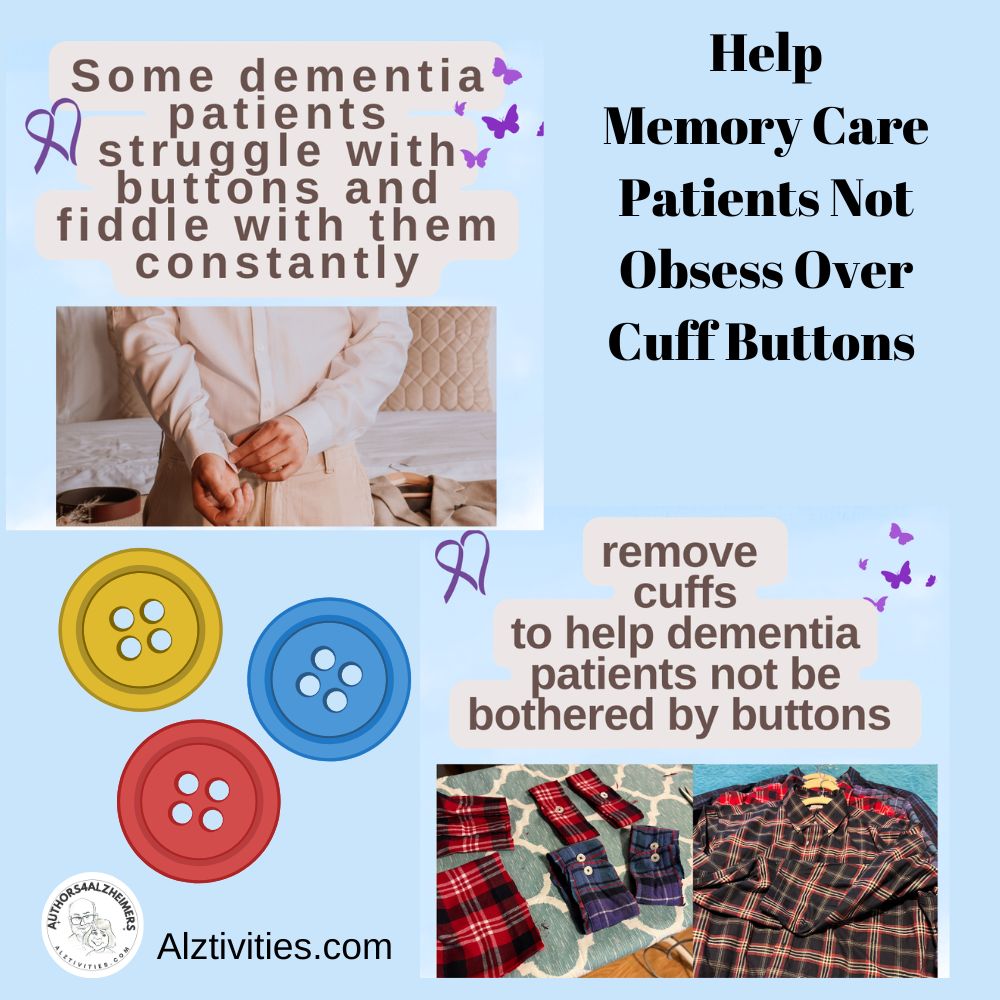
Clothing can be such an issue for people with dementia. Do you have a patient who fiddles with cuff buttons all day long? Yes? Here is one idea to help dementia patients avoid obsessing over cuff buttons: cut off the cuffs and hem the sleeves. Yes, it might not be the most professional look ever, but the comfort level increases. My LO was constantly fiddling with buttons and asking to have them buttoned and unbuttoned. They seem annoyed that they can no longer get buttons through buttonholes, but instead of refraining from trying and leaving them alone, they obsess. Yes, I have tried adaptive clothing, but found it had some new issues, like the back of the shirt flap can hang open. Caregivers do not seem to select adaptive clothing even if available, at least from what I have seen.

My LO was doing this until I decided to just cut the cuffs off and hem the sleeves. Yes, they are a little shorter, but they were too long in the first place. And he just couldn’t stop himself. I was buttoning all day, it seemed. So I wanted to remove the issues.
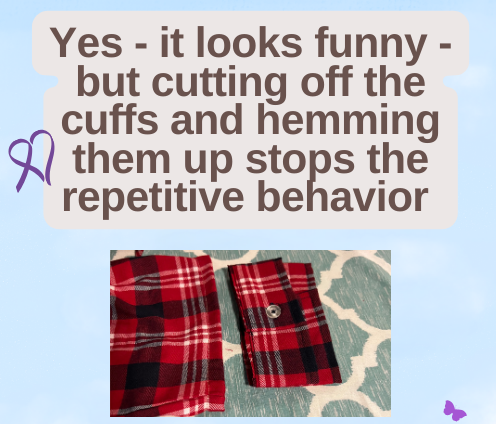
So I went to the ironing board and sewing machine and just cut the cuffs off, hemmed the shirt, and offered no explanation. He didn’t really seem to notice, and the behavior stopped. It used to be all the buttons on the shirt. I see the caregivers often leave his shirt open, and this must be why – he isn’t constantly asking for them to be buttoned.
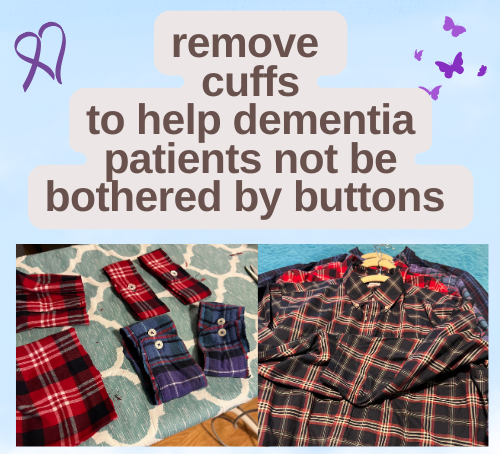
Maybe such drastic measures are not needed for all patients, but this solved one of the many problems we have found along this journey. The days are long as I try to provide caregiving, as I am thinking of more than one person. I have to think for myself, my LO, and also the other CNAs. It can be exhausting. This took one thing off my plate.

I have watched some male dementia patients also obsessively try to button those spare buttons inside the bottom of shirts. So, I would just remove the spare buttons and spare the person from futile effort and concern.

Thanks for reading, and I hope this helps some people.

Carolyn
Posted on

Helpful Devices and Aids for the Home

helpful-devices-for-those-with-dementia

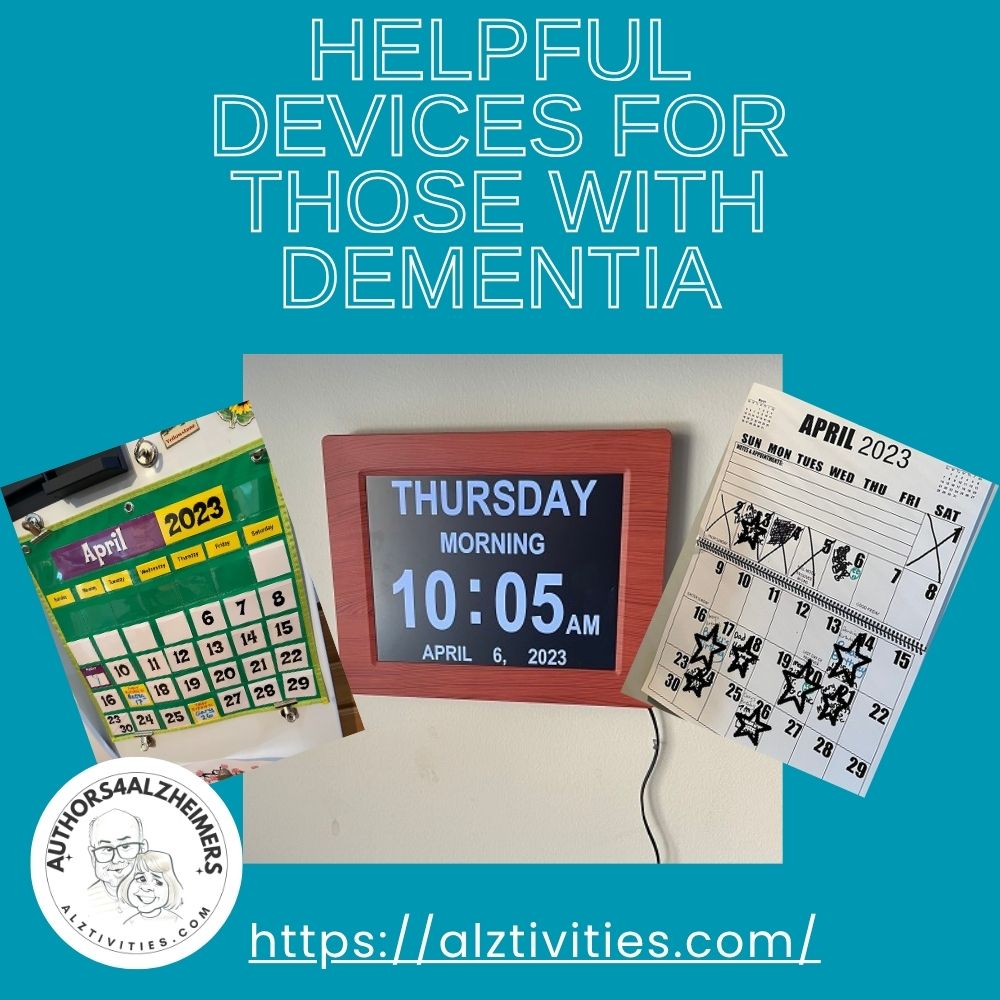
Helpful devices and aids for the home to assist with daily living for those with dementia do offer support. Does your house look like ours? Sometimes it is like nothing helps: no signs, no calendars, no verbal information. However, pointing to such items in the home helps when explaining. People with dementia, like everyone else, reflect the mood at home or with the caretaker. Emotions remain when facts may not. It seems less “confronting” to point to a sign than to try to explain several times verbally.

Calendars Were Important in Earlier Stages

It used to be a big deal to have calendars, clocks, and appointments listed when my LO was in earlier stages. It was all about the time of day, time of the week, month, and season. Now, he doesn’t know much about any of that anymore. He is just lost, and although I tell him about holidays, he is confused. He doesn’t remember his own birthday. When asked, he might say the month and day if he just heard it. However, not the year, and certainly not his age.

Wait Until Later

When trying to make a point, we know it might not be well received, so we should drop it and try again later. That is another approach. Distracting, distancing and changing topics are also good ways to avoid confrontation. We can’t always offer a snack as a distraction.

What do you have in your home or living situation to aid those with dementia? What are some ideas to consider?

Really Good Stuff Calendar

Really-good-stuff-small-calendar-fits-on-our-fridge


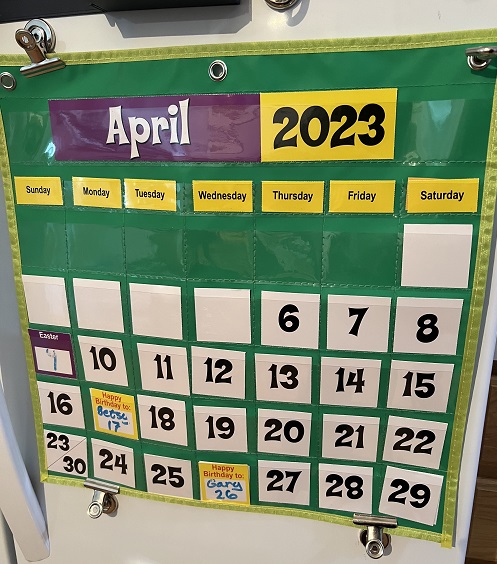
This is a small Really Good Stuff calendar for the elementary classroom. We found it fits on our fridge and find it useful. *Note: I am not an affiliate and do not earn money from Really Good Stuff. I used this product as a teacher, and it worked for a while with my LO with dementia.  He no longer recognizes days or months. Or seasons or years, actually.

DAY CLOCK for Dementia Patients

Day-and-time-clock-to-help-remember-schedule

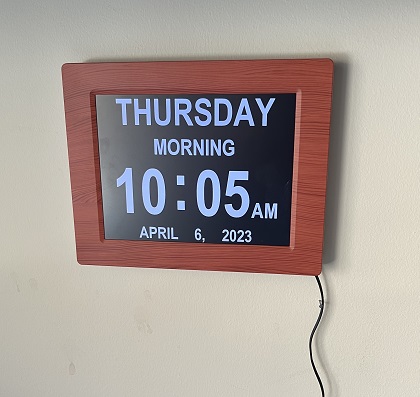
This is a day clock, I learned. It clearly tells the day and time. Very nice! Does it stop my LO from asking twenty times, “What day is today?” No, but I can point at this day clock, and sometimes he remembers to consult it. When it was behind him on the wall, and he was being assessed, he could see it behind the assessor. He would answer. The person would be amazed, and I then pointed to the wall. “OH! There were answers on the wall.” So be sure it is not directly visible when a patient is being questioned.

Large Calendar Purchase

large-calendars-to-help-remember-appointments

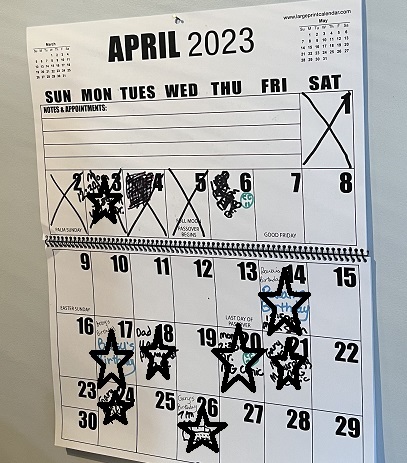
Large calendars help. I bought this one probably on Amazon and find it helpful. I can’t “delete” appointments, though or events that get canceled. I do like it. See our April 2026 free printable calendar at this blog post. It prints on 4 pieces of paper and may be edited or just printed and written upon.

Thank you for reading, Carolyn

You might also like: